Agent Forest is under review at ICLR 2027.
M.S. Computer Science @ UNC Chapel Hill
Atharv Kulkarni
Reliable reasoning and learning for language models and agents.
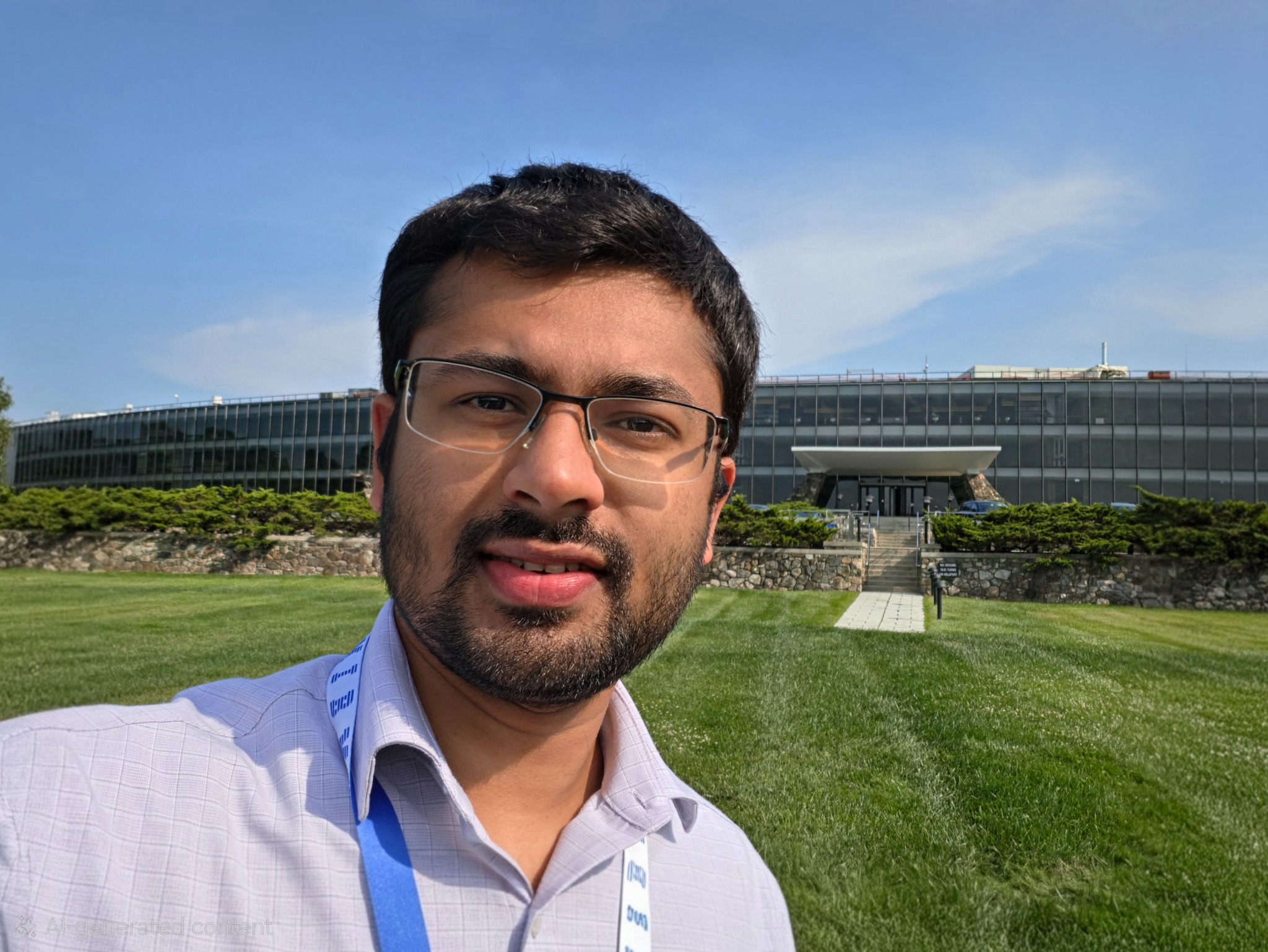
I am an M.S. student in Computer Science at UNC Chapel Hill, advised by Prof. Mohit Bansal. At the MURGe Lab, my research focuses on how language models can learn to reason more reliably through interaction and feedback. I am particularly interested in reinforcement learning for language models, where the model can improve from the consequences of its own behavior rather than only from static supervision. I am also interested in how these ideas extend to agentic systems, where models must reason over longer interactions and learn from the outcomes of their actions in an environment. More generally, I want to understand what enables a model to move beyond pattern matching toward reasoning that is grounded in the problem it is solving. I am also increasingly interested in how knowledge is represented and stored inside language models, and how that knowledge shapes reasoning and changes through learning.
I completed my B.S. in Computer Science at the University of Utah, where I had the privilege of completing my bachelor’s thesis under Prof. Vivek Srikumar. My work at the Utah NLP lab focused on learning from execution and environmental feedback as a way to improve language-model reasoning. Previously, I also worked as a Research Programmer with the Cognitive Computation Group at the University of Pennsylvania under Prof. Dan Roth and Prof. Vivek Gupta, where I studied how to make language-model reasoning over structured information more reliable by reducing reliance on memorized facts and encouraging models to reason through explicit symbolic representations.
Most recently, I worked as a Research Engineer Intern on the Granite Model Training Team at the T. J. Watson Research Center at IBM Research. My research focused on how to create useful training experience for long-horizon AI agents. As agents are asked to operate in richer environments, simply generating more tasks is not enough. The experience has to expose meaningful weaknesses in the agent while still remaining executable and verifiable. I worked on this problem by studying how agentic environments can be systematically made more challenging in ways that provide stronger signals for training and evaluation.
News
Debug or Regenerate? Test-Guided Selection for LLM Code Repair was accepted to Findings of EMNLP 2026.
Completed a Research Engineer internship with the Granite Model Training Team at IBM Research, T.J. Watson Research Center.
Reinforcing Code Generation: Improving Text-to-SQL with Execution-Based Learning is now on arxiv.
LLM-Symbolic Integration for Robust Temporal Tabular Reasoning appeared in Findings of ACL 2025.
Publications
Google Scholar
Agent Forest: Controlled Complexity Growth for RL Environments via a Multi-Agent Orchestration System
Under review at ICLR 2027
A multi-agent framework that grows trusted agentic seed tasks into verified, increasingly complex descendants through tool expansion, branching dependencies, memory, partial observability, and compositionality.
Abstract
Language models are increasingly expected to act as agents that use tools, follow user constraints, observe changing environment state, and complete long-horizon tasks. Training and evaluating these agents requires large collections of challenging, verifiable tasks, yet constructing such data at scale remains difficult. Existing synthetic task-generation methods frequently rely on single-pass prompting, producing tasks that are limited in complexity, weakly grounded in executable environments, and difficult to expand while preserving consistency. We introduce Agent Forest, a multi-agent framework for controlled complexity growth that systematically transforms trusted seed tasks into more complex descendants while preserving executability and verification guarantees. Agent Forest uses five specialized agents that increase complementary dimensions of interaction complexity: broader tool use, branching dependencies, long-range memory requirements, partial observability, and task composition. Rather than simply rewriting instructions to create superficial difficulty, these agents reason over available tools and environment state to modify the underlying interaction problem itself. Because transformations can accumulate and be applied in different orders, a single seed task can generate multiple descendants with distinct complexity profiles, forming a forest of task variants that grows both the scale and diversity of trusted agentic datasets. We apply Agent Forest to three agentic environments, τ²-Retail, τ²-Airline, and General-Agent, transforming trusted seed tasks into diverse descendants with varying complexity profiles. As interaction complexity accumulates, the resulting tasks become substantially more challenging for strong solver agents. On τ²-Retail, Qwen 3.5 397B drops from 75.4% Pass@1 on the original seed tasks to 54.7% on fully transformed descendants. On τ²-Airline, Gemma 4 31B drops from 66.0% to 28.6%, while GLM-5.2 drops from 72.0% to 53.6%. On General-Agent, Gemma 4 31B drops from 68.8% to 25.6%. Overall, accumulated complexity growth reduces Pass@1 by 18.4–43.2 percentage points relative to the original seed tasks, demonstrating that Agent Forest can systematically generate more complex agentic tasks while preserving executability and validity.

Debug or Regenerate? Test-Guided Selection for LLM Code Repair
Findings of EMNLP 2026
PATSSEL treats code repair as a strategy-selection problem: generate both a debugged and regenerated solution, use executable verifier tests as behavioral evidence, and select the stronger repair under a matched compute budget.
Abstract
Large language models (LLMs) are increasingly used as coding assistants, but the programs they generate often fail. Such failures can be addressed by debugging the existing implementation or regenerating a new solution from the problem specification, with existing repair workflows typically defaulting to debugging. We find that the effectiveness of debugging and regeneration depends strongly on initial program quality, suggesting that no single repair strategy is universally optimal. Motivated by this observation, we present PATSSEL (Program-Adaptive Test-guided Repair Strategy Selection), a test-guided repair selection framework that dynamically chooses between debugging and regeneration. Rather than committing to a single repair strategy, PATSSEL generates debugged and regenerated candidates for each buggy program, evaluates them using generated verifier tests, and selects the stronger candidate, leveraging the complementary strengths of debugging and regeneration. Experiments on LeetCodeDataset, LiveCodeBench, and HE+Fix show that PATSSEL achieves average absolute improvements of 2.7% with Qwen3-8B and 3.2% with Llama3-8B over the best single-strategy baselines under the same inference compute budget and routing using gold unit tests. The gains persist across repair models, routing models, and stronger debugger models. Further analysis shows that PATSSEL benefits from the complementary strengths of debugging and regeneration, highlighting the importance of adaptive strategy selection for reliable LLM-based code repair.

Abstract
In this work, we study the problem of code generation with a large language model (LLM), with a focus on generating SQL queries from natural language questions. We ask: Instead of using supervised fine tuning with text-code pairs, can we tune a model by having it interact with a database engine? We frame this problem as a reinforcement learning problem where the model receives execution-based feedback from the environment in the form of scalar rewards. These rewards penalize execution failures and assign positive values when a query returns a correct answer. We use the rewards within the Group Relative Policy Optimization (GRPO) framework. We use a tabular reasoning benchmark to test and evaluate our findings. We find that with only weak supervision in the form of question-answer pairs, RL-tuning improves the accuracy of model generated SQL code from 31.49 to 49.83 while reducing error percentage from 25.43% to 14.71%. This improvement allowed the model nearly match the performance performance to the larger SQLCoder-70B model. Our work demonstrates the potential of using execution-based feedback to improve symbolic reasoning capabilities of LLMs.

LLM-Symbolic Integration for Robust Temporal Tabular Reasoning
Findings of ACL 2025
Introduces TEMPTABQA-C and a symbolic intermediate representation that converts tables into database schemas and uses executable SQL to make temporal tabular reasoning more robust to counterfactuals, scale, and complexity.
Abstract
Temporal tabular question answering presents a significant challenge for Large Language Models (LLMs), requiring robust reasoning over structured data—a task where traditional prompting methods often fall short. These methods face challenges such as memorization, sensitivity to table size, and reduced performance on complex queries. To overcome these limitations, we introduce TEMPTABQA-C, a synthetic dataset designed for systematic and controlled evaluations, alongside a symbolic intermediate representation that transforms tables into database schemas. This structured approach allows LLMs to generate and execute SQL queries, enhancing generalization and mitigating biases. By incorporating adaptive few-shot prompting with contextually tailored examples, our method achieves superior robustness, scalability, and performance. Experimental results consistently highlight improvements across key challenges, setting a new benchmark for robust temporal reasoning with LLMs. Code and TEMPTABQA-C dataset: https://coral-lab-asu.github.io/llm_symbolic.
Research Experience
May 2026 - Aug 2026


Research Engineer Intern
IBM Research · Granite Model Training Team, T.J. Watson Research Center
Dr. Yousaf Shah
Built reinforcement-learning environments and agentic datasets for long-horizon tool use, state tracking, reasoning, and multi-step decision making.
See more
- Developed reinforcement-learning environments and agentic datasets for training and evaluating large language models on long-horizon tool use, state tracking, reasoning, and multi-step decision making.
- First-authored “Agent Forest: Controlled Complexity Growth for RL environments via a multi-agent orchestration system” (under review at ICLR 2027).
- In this work we developed Agent Forest, a multi-agent orchestration framework that transforms seed tasks into verified, progressively harder, and more diverse agentic tasks, introducing controlled difficulty through tool expansion, branching, memory, partial observability, and compositionality.
- Expanded TAU2-Retail, TAU2-Airline, and General-Agent into hardened task collections reaching 388.6%, 338.0%, and 439.6% of their original seed-set sizes, respectively. Demonstrated that the generated tasks introduce meaningful agentic difficulty: Qwen 3.5 397B dropped from 75.4% → 54.7% Pass@1 on TAU2-Retail; Gemma 4 31B from 66.0% → 28.6% on TAU2-Airline and 68.8% → 25.6% on General-Agent; and GLM-5.2 from 72.0% → 53.6% on TAU2-Airline.
May 2025 - Present
Graduate Research Assistant
University of North Carolina at Chapel Hill · MURGe Lab
Research on reinforcement learning, LLM code generation, adaptive verification, and agentic AI.
See more
- Developing reinforcement learning methods to improve memory and reasoning in agentic AI systems.
- Developed reinforcement learning solutions for multi-agent AI in the domain of LLM based code generation at the MURGE lab.
- First authored Debug or Regenerate? Test-Guided Selection for LLM Code Repair. In this work we developed a test-guided LLM code-repair framework that adaptively routes between debugging and regeneration, improving pass@1 across LeetCode, HumanEval+Fix, and LiveCodeBench. This paper has been accepted at EMNLP 2026 (Findings).
Aug 2024 - Aug 2025

NLP Research Assistant
University of Utah · Utah NLP
Studied execution-based reinforcement learning for code generation and structured reasoning.
See more
- Developed a novel reinforcement learning (RL) pipeline that directly integrates an SQL execution engine into the LLM training loop. This approach enables models to learn from real execution feedback, optimizing for both syntactic validity and answer correctness in text-to-SQL generation.
- Engineered a structured reward system that penalizes invalid queries and incrementally rewards partial and exact matches, combining syntactic checks, Relaxed Exact Match Score (REMS), and Exact Match Score (EMS) to guide learning toward complete and robust SQL generation.
- Benchmarked multiple RL algorithms (including Monte Carlo REINFORCE, Proximal Policy Optimization (PPO), Group Relative Policy Optimization (GRPO), Odds Ratio Preference Optimization (ORPO), and REINFORCE Leave-One-Out (RLOO), demonstrating the effectiveness of GRPO for symbolic code generation without the need for a learned value network.
- Leveraged the TEMPTABQA-C dataset to train and evaluate models on complex, multi-step temporal reasoning tasks—including counterfactual scenarios—highlighting improvements in both accuracy and generalization.
- Implemented efficient fine-tuning using LoRA and leveraged NVIDIA NV-Link multi-GPU infrastructure to scale training.
- Results: RL-tuned models improved SQL accuracy from 31.49% to 49.83% and reduced error rates from 25.43% to 14.71%. Our 7B RL-tuned model matched the performance of much larger 70B parameter models.
- Impact: This work demonstrates that execution-based RL not only improves text-to-SQL performance and robustness, but also drives models toward better schema adherence and more interpretable, tool-augmented reasoning—bridging the gap to larger, resource-intensive models.
- Paper Publication: First-authored "Reinforcing Code Generation: Improving Text-to-SQL with Execution-Based Learning", introducing the RL-approach and the tuned model.
May 2024 - Aug 2025

Research Programmer
University of Pennsylvania · Cognitive Computation Group
Prof. Dan Roth & Prof. Vivek Gupta
Developed TEMPTABQA-C and symbolic methods for robust temporal reasoning over structured data.
See more
- Dataset Creation: Designed and developed TEMPTABQA-C, a large controlled dataset for evaluating temporal tabular reasoning. Extracted temporal data from Wikipedia tables and transformed it into a structured relational database schema. Generated 100k question-answer pairs across categories such as original, counterfactual, and multi-step reasoning, providing a benchmark for systematic evaluation.
- LLM Evaluation: Benchmarked state-of-the-art LLMs (GPT, Llama, Gemini, SQL Coder, Mixtral, Code Llama, etc.) using TEMPTABQA-C across zero-shot, few-shot, adaptive few-shot, chain-of-thought, faithful chain-of-thought, program-of-thought, plan & solve and CLEAR prompting setups. This analysis revealed limitations, including sensitivity to table size, counterfactual reasoning challenges, and reduced accuracy on complex queries.
- Symbolic Integration: Developed a symbolic intermediate representation by training LLMs to:
1. Structure unstructured tabular data into a schema and 2. Translate natural language questions to SQL before execution. This approach eliminated performance degradation by reducing hallucinations on
counterfactual and large context scenarios and enabling LLMs to use SQL as a reasoning tool and increasing accuracy from 59% to 73% - Addressing Core Challenges in LLMs: Demonstrated the effectiveness of symbolic integration in overcoming three key challenges in temporal reasoning for LLMs:
1. Counterfactual Robustness: Reduced performance gaps between original and counterfactual tables.
2. Scalability to Large Tables: Achieved consistent high accuracy even with large tables, unlike direct prompting methods.
3. Complex Queries: Improved performance on complex, multi-step and hierarchical questions, outperforming direct approaches in accuracy. - Paper Publication: First-authored "LLM-Symbolic Integration for Robust Temporal Tabular Reasoning," introducing TEMPTABQA-C and the symbolic framework. This paper is accepted in the ACL 2025 (Findings) conference.
Education
University of North Carolina at Chapel Hill

M.S. in Computer Science (Thesis)
Advisor: Prof. Mohit Bansal
University of Utah

B.S. in Computer Science, Minor in Physics
Advisor: Prof. Vivek Srikumar · UROP Award
Thesis: Improving Complex Reasoning Skills in LLMs through Tool-based Neuro-Symbolic Methods
Selected Projects
Machine Learning
Implementation of a Machine Learning Library
Developed a machine learning library from scratch by implementing Random Forest, logistic regression, perceptron, support vector machines, and a neural network. Applied the library to a downstream prediction task using TF-IDF and categorical features to evaluate the implemented methods in a practical setting.
Natural Language Processing
Neural Natural Language Processing and Transformer Modeling
Implemented neural NLP models in PyTorch, including a Deep Averaging Network with GloVe embeddings and Transformer language models with multi-head attention, positional encodings, and causal masking. The work also examined robustness to noisy text through embedding optimization and misspelling correction.
Reinforcement Learning
Reinforcement Learning and Sequential Decision-Making
Implemented and evaluated reinforcement-learning methods spanning imitation learning, multi-armed bandits, dynamic programming, Q-learning, deep Q-networks, REINFORCE, and actor-critic methods. Experiments covered discrete and continuous-control environments including MountainCar, Blackjack, LunarLander, CartPole, and MuJoCo tasks.
Deep Learning
Deep Learning for Vision, Sequence Modeling, and Generative Models
Implemented deep-learning architectures across image classification, sequence modeling, and generative modeling, including fully connected networks, convolutional neural networks, recurrent models, and generative adversarial networks. The work emphasized model implementation, optimization, and evaluation across vision and sequential-data tasks.
Database Systems
Relational Database Design and Deployment for Learning Management Systems
Designed and implemented the relational database backend for a learning-management system, covering ER modeling, normalized schemas, stored procedures, triggers, and application-facing SQL queries. The database was deployed on Azure SQL with attention to data integrity, automation, and query performance.
Multimodal Reasoning
Grounded Answer Updating for Multi-Timestamp Video Question Answering
Studied answer updating in dynamic video question answering, where the correct answer can change as visual evidence evolves over time. Developed a structured grouped-answer framework for Qwen2.5-VL-7B and trained it with GRPO using a schema-gated curriculum reward, improving overall accuracy on RTV-Bench from 38.57% to 56.37% while strengthening consistency across temporally related questions.